
Open Task Manager, click the Startup tab, and look for apps marked High impact or Medium impact that you don't need the moment you sign in. Disable those first, either in Task Manager or through the app's own settings. If your PC still boots slowly afterward, run a Clean Boot and check Autoruns for hidden autostarts that Task Manager never shows you.
TL;DR:
- Disabling high and medium impact startup apps can significantly improve boot times, especially if multiple low-impact apps are running together.
- Task Manager's impact ratings rely on measurable CPU and disk usage during startup, but a high number of low-impact apps can cumulatively cause delays.
- Use Safe Boot, Autoruns, and performance traces to identify hidden or persistent startup programs that Task Manager may not reveal.
- Regularly review and re-disable apps that re-enable automatically after updates or reinstallation to prevent startup bloat.
- Disabling Fast Startup temporarily can help troubleshoot blank impact ratings, but most users benefit from leaving it enabled during normal use.
Table of Contents
- Where to find and audit your startup programs
- What Task Manager's startup impact ratings actually measure
- How to disable, delay, or remove startup apps safely
- Fixing 'Not measured' or blank startup impact values
- When to escalate: Clean Boot, Autoruns, and performance traces
- A simple routine to keep startup lean
- Why reversible changes beat one-click fixes
- A measured alternative if you'd rather not do this manually
- FAQ
- Sources
Where to find and audit your startup programs
Press Ctrl+Shift+Esc to open Task Manager, then click the Startup tab (in Windows 11 it may be labeled "Startup apps"). This view lists every app registered to launch at sign-in, along with its publisher and a Startup impact rating.
Settings offers a similar view under Apps > Startup, with the same toggle controls but a cleaner layout for anyone who finds Task Manager cluttered. Windows actually manages these entries through both interfaces, pulling from the same underlying list according to Microsoft's own guidance.
Beyond these two menus, some apps register themselves through Startup folder shortcuts or Windows registry run keys, which is why a handful of stubborn programs never show a toggle in Settings. We cover the folder side of this in more detail in our piece on the Windows Startup folder, including the per-user and all-users locations worth checking.
A quick audit routine:
- Scan the publisher column for anything unfamiliar or clearly bundled software you didn't intentionally install.
- Note which apps show High or Medium impact and ask whether you use them within the first minute of sign-in.
- Flag anything you haven't opened in weeks. If you don't use it daily, it has no business launching daily.
What Task Manager's startup impact ratings actually measure
Task Manager's impact ratings aren't guesses. According to Microsoft's Compatibility Cookbook, High impact means an app uses more than 1 second of CPU time or more than 3 MB of disk I/O during boot. Medium impact falls between 300 milliseconds and 1 second of CPU time, or 300 KB to 3 MB of disk I/O. Low impact sits below both of those thresholds.

"Not measured" or a blank entry means Windows hasn't collected enough boot data yet, often because the app was just added or your PC hasn't completed several normal startup cycles.
One thing the ratings don't show directly: cumulative drag. A dozen Low-impact apps running together can slow your boot as much as one High-impact culprit, since each one still competes for CPU and disk access during the same narrow startup window.
How to disable, delay, or remove startup apps safely
Start with the least invasive option and escalate only if needed.
- In Task Manager's Startup tab, right-click the app and select Disable. This stops it from launching at sign-in without uninstalling anything.
- Reboot and confirm the app you rely on daily still works correctly when you open it manually.
- If the change causes a problem, return to the same tab and select Enable to restore it instantly.
- For apps with their own settings menu (cloud sync tools, chat apps, creative suites), use the in-app "launch at startup" toggle instead of Task Manager when one exists, since it's less likely to be re-enabled by an app update.
- Check the Startup folder (accessible by typing
shell:startupinto File Explorer's address bar) for shortcuts that don't appear in Task Manager at all.
Pro Tip: Disable one app at a time and reboot before touching the next one, so if something breaks, you know exactly which change caused it.
Avoid editing the registry directly unless you've exhausted the above. Keep your antivirus and driver-related startup entries enabled, and jot down what you disabled and when, since some uninstall routines quietly re-add themselves later. Our guide on removing bloatware walks through safely clearing out vendor-installed startup junk that falls into this category.
Fixing 'Not measured' or blank startup impact values
A blank or "Not measured" rating usually traces back to one of three causes: Fast Startup skipping part of the normal boot trace, Windows not having collected enough boot cycles yet, or a third-party antivirus or cleanup tool interfering with the diagnostic data Windows needs, a pattern documented by TheWindowsClub.
The fix is mostly patience and elimination. Turn off Fast Startup temporarily through Control Panel's power options, then let your PC go through a handful of normal boots so Windows can gather fresh telemetry, a delay also noted in Microsoft's community discussion of the issue. If ratings still won't populate, try a Clean Boot to rule out a security or cleanup utility blocking the trace, then re-enable that utility once you've confirmed it wasn't the cause.

When to escalate: Clean Boot, Autoruns, and performance traces
Disabling obvious culprits only gets you so far. When slow startup persists, these tools go deeper.
- Clean Boot: Open System Configuration (msconfig), check "Hide all Microsoft services," then disable everything remaining in the Services tab and all items in Task Manager's Startup tab. Reboot and see if the problem disappears, confirming a third-party app or service is responsible, a method detailed in Microsoft's Clean Boot guide. Our own breakdown of what a Clean Boot actually fixes covers the binary search technique: re-enable half the disabled items each reboot to isolate the exact culprit faster than testing one by one.
- Autoruns: This free Sysinternals tool exposes services, scheduled tasks, shell extensions, and registry run keys that Task Manager never shows, according to Microsoft's Sysinternals documentation. Disable one entry at a time and keep notes, since some entries are tied to legitimate system functions.
- Performance trace (Windows Performance Analyzer): Reserve this for genuinely stubborn cases where boot time is slow but no app or service seems responsible; it captures a detailed timeline of what's consuming time during startup.
A simple routine to keep startup lean
Startup bloat creeps back in gradually, usually through app updates that quietly re-enable their own autostart setting. A short recurring routine keeps it in check.
- Weekly: glance at Task Manager's Startup tab and disable anything new or unfamiliar that snuck in.
- Monthly: review each app's own startup settings, install pending updates, and run a quick malware scan to rule out unwanted autostarts.
- Quarterly: do a full Autoruns pass and consider a Clean Boot if your PC feels slower than it did three months ago.
- Keep a short written list of apps explicitly allowed at startup, so anything not on that list gets questioned the next time you look.
For background processes that build up between these checks, our walkthrough on cutting background processes covers fixes you can apply in five to ten minutes.
Why reversible changes beat one-click fixes
The safest way to speed up a PC is also the most boring one: change one thing, confirm it works, and keep a clear path back if it doesn't. Tools that make sweeping changes without explaining them trade a few saved minutes for a much harder cleanup later.
— Ian
A measured alternative if you'd rather not do this manually
Manual audits work, but they take time, and most people don't repeat them often enough to catch new bloat before it piles up. That's the gap a tool like this AI-powered PC diagnostic and optimization software is built to close, with a few differences from typical one-click optimizers worth knowing:
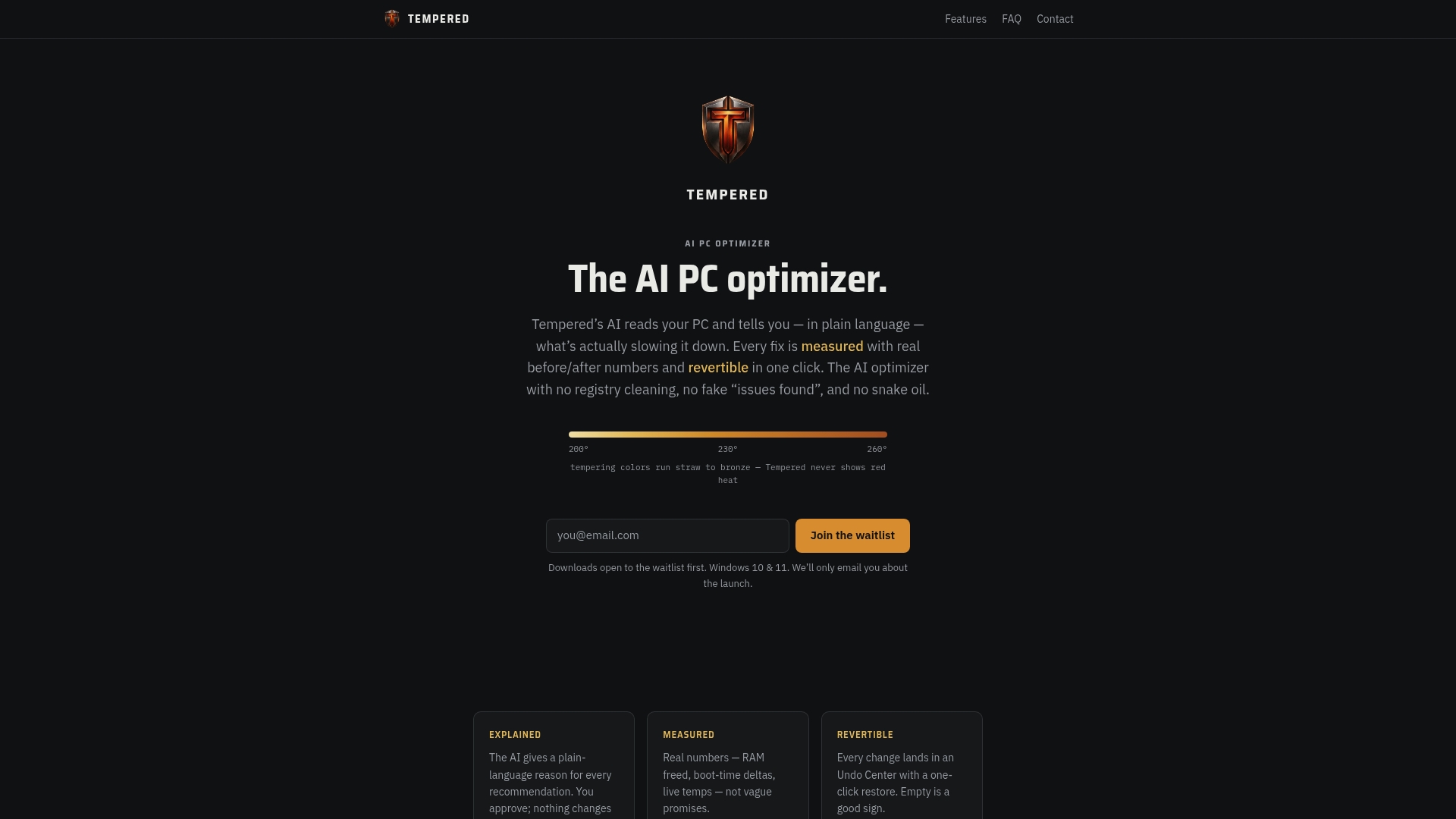
- It measures real CPU, RAM, and disk activity before suggesting any change, rather than applying blanket tweaks.
- Every recommendation comes with a plain-language explanation of what it does and why.
- Changes require your approval, and each one has a one-click undo path if you change your mind.
- It supports Windows 10 and 11, including startup management alongside broader performance tuning.
If weekly manual checks aren't realistic for you, the Torque or Torque Max plans extend this to ongoing, hands-off monitoring. They pick up the same kind of drift a quarterly Autoruns pass would catch, just automatically.
FAQ
Is it worth disabling Fast Startup?
Fast Startup can occasionally interfere with Task Manager's ability to measure startup impact accurately, and disabling it temporarily is a reasonable diagnostic step when troubleshooting blank ratings. For most people in normal daily use, leaving it on is fine; turn it off only if you're actively diagnosing a startup problem or your impact data won't populate.
How do I change which programs open at startup in Windows?
Open Task Manager (Ctrl+Shift+Esc), go to the Startup tab, right-click any app, and choose Disable or Enable. You can do the same from Settings under Apps > Startup, according to Microsoft, and both methods take effect on your next reboot.
What does 'Not measured' mean in Task Manager's startup impact column?
It means Windows hasn't yet collected enough boot-cycle data to rate that app, often because it was recently added or your PC hasn't gone through several normal startups since the last change. A few regular reboots usually resolves it.
What's the difference between Low, Medium, and High startup impact?
These ratings are based on measured CPU time and disk I/O during boot: Low impact uses under 300 milliseconds of CPU and under 300 KB of disk I/O, Medium falls between that and 1 second CPU or 3 MB disk I/O, and High exceeds either of those upper thresholds, per Microsoft's documentation.
When should I use Autoruns instead of Task Manager?
Use Autoruns when Task Manager doesn't show the source of a startup item or when you suspect a hidden scheduled task, service, or shell extension is launching at boot. Sysinternals Autoruns exposes far more auto-start locations than Task Manager's standard view.
Sources
- Configure startup applications in Windows | Microsoft Support
- Desktop startup apps - Compatibility Cookbook | Microsoft Learn